What a rebooking sequence actually says
Short, specific, one call to action. Show the pattern, not a template to plug in.

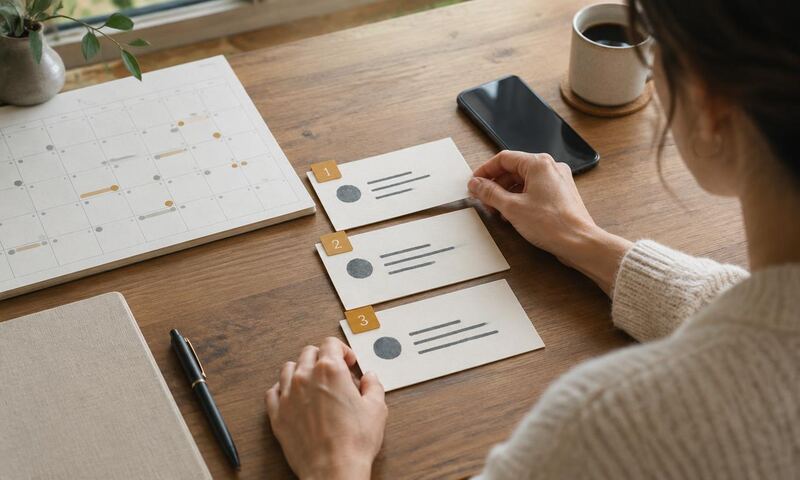
Message length is not usually the issue. A message that sounds like a marketing blast tends to get treated like one.
An adaptable rebooking sequence reads like a reminder from someone who remembers you. Here is a pattern to test for each message in a three-part sequence, then adjust based on what gets replies.
Cycle-timed prompt
Message one. Cycle-timed prompt
Fires at the target rebooking window for the customer's last service. Sent on the channel they booked with.
Example (six-week cycle):
- 01Hi [First name]. It has been about six weeks since your last [service]. Want the same day and time this week, or a different day works better?
- 02Booking link: [link]
Why message one works
It names the last service so it does not read as a mass send. It offers a specific default (same day and time) so the customer does not have to think. It closes with a real link, not a promise to call.
Soft nudge
Message two. Soft nudge
Two weeks after message one, only if the customer has not booked. Same channel. Shorter.
Example:
- 01Hi [First name]. Still holding the calendar for you. Want me to book you in? [link]
Confirmation
Confirmation message
When they book, the confirmation carries the last visit's context so it does not feel like a new customer flow.
Example:
- 01Booked. [Service] on [date] at [time]. Same as last visit. See you then.
What to strip
- Msg 1Near expected due date
- Msg 2One week later
- Msg 3Final nudge, then stop
- Msg 1Near expected due date
- Msg 2One week later
- Msg 3Final nudge, then stop
Each of these can creep into a rebooking sequence. Cut them, then compare replies against your prior copy.
- 01Emojis, exclamation points, and marketing brand blocks.
- 02We miss you, hope you are doing well, and other filler.
- 03Manufactured urgency: only a few spots left, book now.
- 04Discount codes bundled into the ask.
Worked example
Worked example. Adapting one script across three services
One base script: 'Hi {name}, you're due for your {service}. Want your usual {window}? Book here: {link}.' That single template covers a haircut, a lash fill, and a car detail if the tokens are populated correctly.
For services with variable duration, add one clause: 'or reply with a day that works.' For services that always book on the same day of the week, drop it. Do not maintain three separate copies; maintain one template and let the data control what appears.
The failure mode is not tone. It is stale tokens. When {service} says 'default' or {window} says '4-6 weeks' for a service that changed to 6-8, customers notice.
Frequently asked questions
Wire the sequence into your booking tool.
The Loop Audit checks your records and a test booking, then names the seam. Any module is prescribed after that, against a written scope.